
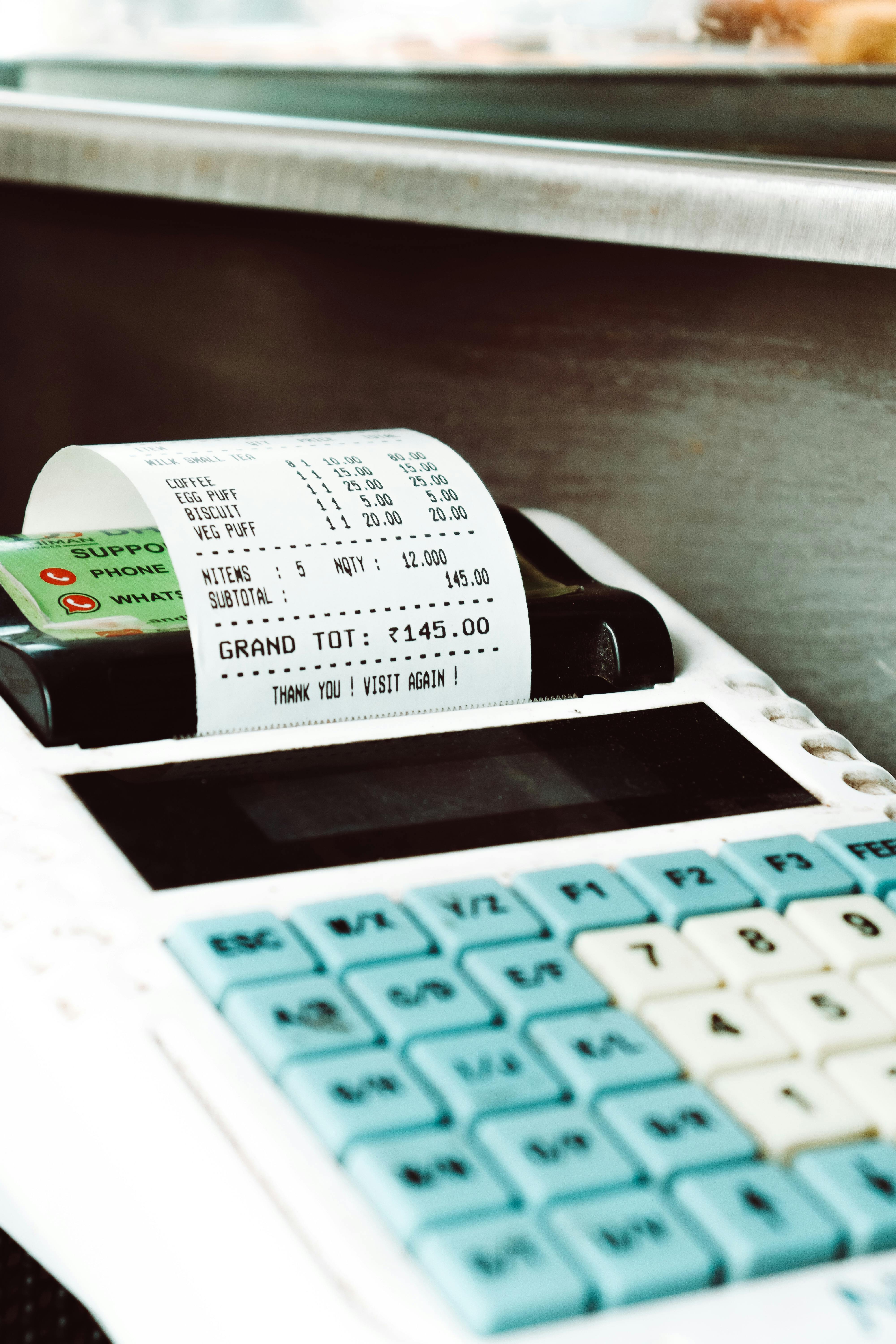
Dual pricing is a program that lets a business charge two prices for the same item: a lower price for cash, check, or debit, and a slightly higher price for credit cards so the cost of accepting cards is covered by the customers who choose to pay with one, instead of coming out of the business’s own margin. It’s legal in all 50 states, and it’s why a growing number of small businesses now pay $0 in card processing fees.
That’s the short answer. The rest of this page covers how it actually works, what it costs a business to not do this, and, just as importantly, the real reasons most business owners hesitate, and whether those reasons hold up.
The real reason most businesses haven’t switched yet
Here’s something most articles on this topic won’t tell you: the biggest barrier to dual pricing isn’t legal risk, and it isn’t cost. It’s a fear gap. When business owners are asked how they think customers will react to seeing a card price and a cash price, a majority predict pushback, annoyance, complaints, and customers walking out. But when researchers looked at what actually happens at the register once a program is live, the real reaction is dramatically smaller than the imagined one. The fear is real. The outcome it’s based on mostly isn’t. That gap matters, because it means a lot of businesses are leaving real money on the table over a risk that’s larger in their head than at the counter.
How dual pricing actually works
A dual pricing program shows both prices wherever the customer sees a price on a menu, a shelf tag, a price list, or a point-of-sale screen so nothing is hidden, and nothing shows up as a surprise at checkout. A simple example: an item priced at $100 might show as $100 for cash and $103 for card, a straightforward 3% difference, which is how most point-of-sale systems display it by default. Not sure what you’re actually paying right now? Our guide to reading a merchant statement walks through finding your real effective rate before you make the switch.
There’s a slightly more precise version worth knowing, though. If a business wants to net exactly $100 no matter how the customer pays, the card price actually needs to be a little higher than a flat percentage bump on a 3.5% program; that’s $100 ÷ (1 − 0.035), or $103.63, not an even $103.50. Most systems round this automatically, but it’s worth understanding why the card price isn’t always a perfectly round number.
Is dual pricing actually legal?
Yes! In all 50 states, with no exceptions, as long as it’s structured correctly. This is worth explaining clearly, because there’s a lot of confusion floating around that conflates dual pricing with credit card surcharging, which is a different program with real state-by-state restrictions.
The distinction comes down to how the price is framed, not the dollar amount:
- Surcharging adds a fee on top of a posted price when someone pays by card. The posted price is the lower one; card payers pay extra.
- Dual pricing / cash discounting posts the card price as the base price, and cash/check/debit payers get a discount off it.
The Supreme Court addressed exactly this distinction in Expressions Hair Design v. Schneiderman (2017), ruling that laws restricting how a business can describe its pricing regulate speech, not the underlying transaction, which is precisely why the framing matters legally even when two programs land on an identical final price. A handful of states still restrict surcharging specifically. None of them restrict a properly structured dual pricing or cash discount program.
What it actually costs a business to skip this
Card processing typically runs somewhere between 2% and 3.5% of every card transaction, depending on the business and the card mix. That adds up faster than most owners expect:
| Monthly card volume | Typical annual processing cost |
|---|---|
| $10,000/mo (e.g. a small retail shop) | ~$3,600–$4,200/yr |
| $30,000/mo (e.g. a busy quick-service restaurant) | ~$9,000/yr |
| $50,000/mo (e.g. a bar or mid-size restaurant) | ~$18,000–$21,000/yr |
| $80,000/mo+ (e.g. a multi-register retail operation) | ~$25,000–$33,000/yr |
These are illustrative, based on typical effective rates; a business’s actual number depends on its real card mix and current rate, which is exactly what a real statement review shows. But the pattern holds: for most businesses, this isn’t a rounding error. It’s real money, every single year, indefinitely, for as long as the business keeps absorbing the cost itself.
What customers actually think
This is the part that surprises most business owners. Real research on this, not just processor marketing, shows:
- The large majority of consumers say they’d rather see both prices upfront than have a fee sprung on them at checkout with no warning.
- Framing changes how people feel about an identical dollar amount. A “cash discount” reads as meaningfully more positive to consumers than a “credit card surcharge,” even when the two end up costing the exact same amount at the register. This is a well-documented psychological effect (a charge feels roughly twice as bad as an equivalent discount feels good), and it’s a real part of why the dual pricing framing specifically tends to land better than a surcharge does.
- The actual complaint trigger, when negative reactions do happen, usually isn’t the pricing model itself; it’s unclear signage or a staff member who can’t explain it confidently when asked. A program that’s clearly posted and consistently explained avoids almost all of the friction business owners worry about upfront.
None of this means zero pushback, ever, from every single customer. It means the realistic reaction is smaller and more manageable than the hypothetical one most owners picture before trying it.
Where dual pricing gets genuinely harder to run
Most content on this topic stops at “it’s legal, and it saves money.” Two real operational realities are worth knowing before switching, because they’re where a business can actually get it wrong:
1. Complexity scales with how many prices you have to display. A gas station with one digital sign has an easy job: one price, updated in one place. A restaurant with a 50-item menu, or a retailer with a few hundred SKUs, has real work to do: every price tag, every menu, every online listing needs to show both numbers consistently. This is manageable, but it’s not nothing, and a business should go in knowing it’s a real setup task, not a five-minute toggle.
2. Dual pricing and cash discounting aren’t quite interchangeable, and getting the label wrong is a real compliance issue, not just a customer-facing annoyance. The card networks (Visa, Mastercard) treat these as distinct program types with different signage and receipt requirements. A program set up under the wrong label can put a business’s standing with its processor at risk, even if the actual pricing behavior looks identical to a customer. This is exactly the kind of detail that’s worth getting right from a knowledgeable processor at setup, rather than configuring it generically and hoping it’s close enough.
How to actually do this right
- Confirm the program is set up correctly for your state and your card mix — not a generic template, an actual configuration matched to how your business processes cards today.
- Post both prices everywhere a customer sees a price — menu, shelf, checkout screen, and receipt, consistently.
- Make sure your staff can explain it in one sentence — (“cash price is the lower one; card price covers the processing fee”). This single thing prevents most of the friction that does happen.
- Get your actual numbers, not an estimate — The savings table above is illustrative; the real number for your business comes from your actual current statement.
Is dual pricing right for your business?
If your business is currently absorbing 2-3.5% in card fees on every sale, the honest math almost always favors switching. The real question isn’t usually whether it saves money; it’s whether the setup is done correctly and explained clearly enough that the fear most owners start with never actually shows up at the register.
Want to see what this would actually look like for your business the real numbers, not an estimate? Get a free comparison →